Category: Andrena
-
Nick’s 2024 Holiday Calendar
Every year, I make a holiday calendar for my family and friends of my nature photography. For the past few years, as my obsession with bees has deepened, my calendars have naturally featured photos of wild bees almost exclusively (surprise, surprise). One consistent piece of feedback that I have received from recipients is that they…
-
Carlin’s/regular mining bee (Andrena carlini/regularis)
Andrenidae > Andrena > Andrena carlini / Andrena regularis It wouldn’t be spring without spotting Carlin’s and Regular mining bees (Andrena carlini / Andrena regularis). Look for a large, fuzzy Andrena that resembles a small bumble bee: black abdomen, tan thorax, and dark sides of the thorax. Both members of this species pair are important…
-
Andrena
One of the biggest groups of bees in our region, Andrena are most easily seen in spring, when dozens of species emerge to take advantage of spring ephemerals and woody plants in flower. A few species are active in midsummer, but most are uncommon (with the exception of the exotic and abundant A. wilkella). Late…
-
Nomada
Nomada are red, black, and yellow wasp-like bees, most of which are cleptoparasites of mining bees Andrena. As cleptoparasites, Nomada are tied to their hosts, and so most species occur in spring when Andrena diversity is at its peak. You are likely to encounter Nomada nectaring on flowers in your garden, hovering in warm, sunny…
-
Cloudy-winged mining bee (Andrena nubecula)
Andrenidae > Andrena > Andrena nubecula Cloudy-winged mining bee (Andrena nubecula) is a sure sign of fall. This dark slender mining bee is primarily found on goldenrods in old fields, meadows, and suburban gardens adjacent to forests. Look for a medium-sized bee, with smoky wings held out at an angle, and armpits full of orange…
-
Bradley’s mining bee (Andrena bradleyi)
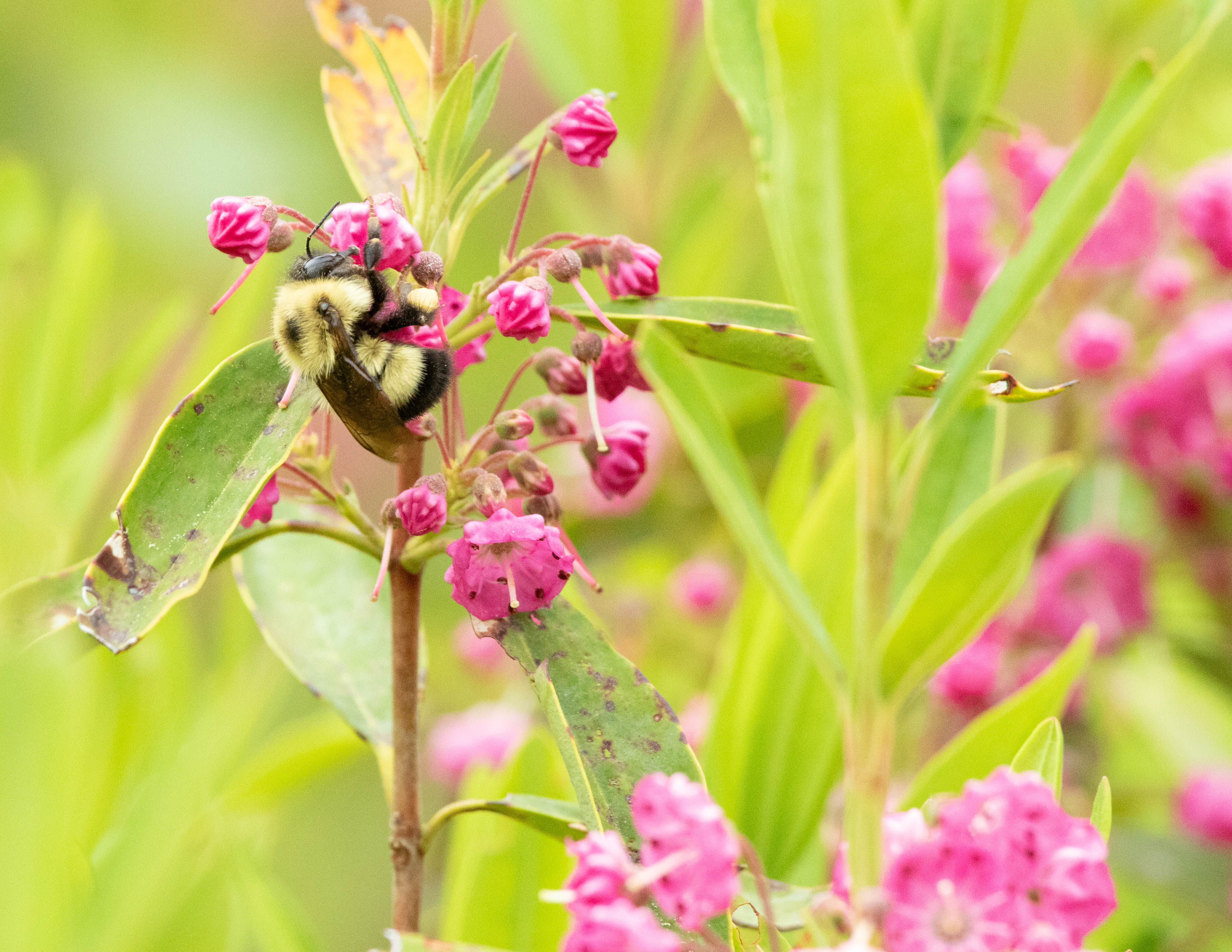
Andrenidae > Andrena > Andrena bradleyi Bradley’s mining bee (Andrena bradleyi) is a diminutive bee of ericaceous shrublands, pine barrens, and blueberry fields. This common, spring-active species has a conspicuously long face which is useful for accessing nectar from the deep goblet-shaped flowers of their host plants. Phenology One generation per year, active from late-March…
-
Aster mining bee (Andrena asteris)
Andrenidae > Andrena > Andrena asteris Look for aster mining bee (Andrena asteris) in fall when the temperatures begin to drop and roadsides become ablaze with goldenrods and asters. The species is common throughout New England and can be found in a wide range of habitats from gardens to meadows to old fields to coastal…
-
Spring beauty mining bee (Andrena erigeniae)
Andrenidae > Andrena >Andrena erigeniae True to its name, spring beauty mining bee (Andrena erigeniae) specializes in collecting pollen from the spring ephemeral wildflower spring beauty (Claytonia). Look for distinctive bright-pink Claytonia pollen on the female’s hind legs. This often-abundant species occupies deciduous forests, but also suburban backyards and semi-urban settings when its host plant…
-
Dunning’s mining bee (Dunning’s miner bee)
Andrenidae > Andrena > Andrena dunningi Dunning’s mining bee (Andrena dunningi) is fond of lazy gardeners: this spring-active species thrives in sunny, unkempt suburban lawns and gardens full of dandelions. It can be distinguished from most other spring-active Andrena by the combination of orange thorax and entirely black abdomen. Phenology Late-March/early-April through May, with latest…
-
Hairy-banded mining bee (Andrena hirticincta)
Andrenidae > Andrena > Andrena hirticincta Hairy-banded mining bee (Andrena hirticincta) is a distinctive late-summer and fall-active mining bee found on goldenrods and asters. Both males and females are covered in long golden hairs on the face, thorax, and abdomen. Look for this species in a variety of habitats including meadows, old fields, roadsides, and…